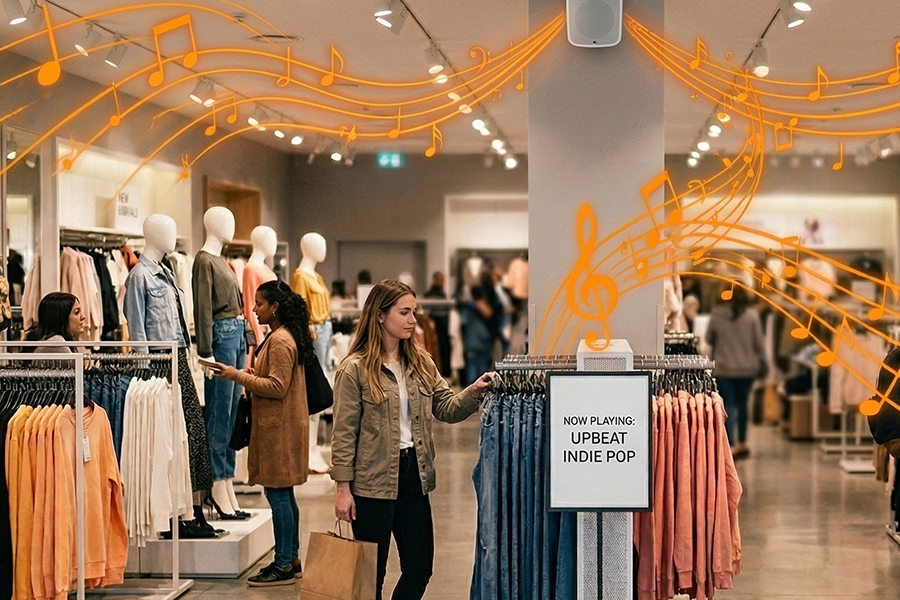


Who doesn’t like a good song? It puts you in a great mood and often takes you back to the place when you first heard it. So if that’s happening to you, it’s also happening to your customers. When they hear a song they like it triggers a number of positive emotional responses which can be good for business. If you don’t play in-store music for retail in your premises, you should, and here are three reasons why.
1. Build the right atmosphere
Every retailer is well aware that e-commerce has made trading in physical stores more challenging. The quality of a customer’s shopping experience is now one of their most important concerns. You shouldn’t underestimate how big a role music plays when creating and enhancing that experience. Research shows that the music you play affects not only the store’s environment, but also shoppers’ moods and feelings. Think about what kind of atmosphere and customer experience you want to create.
2. Encourage shoppers on the path to purchase
When people enjoy in-store music, they tend to spend more on impulse purchases. What’s more, the same happens even if they don’t notice music is playing, which shows the subconscious (yet very real) effect music has on shopping habits. It has been noted that the type of music played can trigger specific purchases. Classical music, for example, has been found to influence shoppers to buy more expensive items. So if you sell big-ticket items, you may want to consider classical music rather than the latest pop songs. A study in the 1990’s found that French music played in a wine store boosted sales of French wine. Likewise more people bought German wine when German music was playing. This strategy can apply to your store.
3. Increase productivity with in-store music for retail
Remember that it’s not just customers but employees and managers who will also benefit from in-store music. A thoughtful music strategy is a terrific tool that helps boost staff morale, concentration and productivity. A recent study showed that 88% of people listening to music at work performed better, and more accurately, than those who didn’t. It’s not the only study, many show similar results.