datmedia insight and expertise:
Digital Signage: First Steps

Digital signage is your primary communications channel.
When you’re talking to customers, digital signage is the platform you turn to. It’s dynamic, it’s eye-catching, it operates in real-time. No other channel can compete. So how do you implement a digital signage network? There are a lot of moving parts and many things to consider from screen location to display type, connectivity and content management.
This ability to change content at a moment’s notice is the key to digital signage. However maximising the benefits, as well as the potential to improve sales and minimise costs, takes some planning and consideration.
For those just starting their journey, here are a few ideas to help you on your way.
Know your objective
One of the first things business needs to consider before investing in digital signage is exactly what it is they hope to achieve.
All too often, companies start without a clear objective or content strategy in mind. As a result, they end up using screens as fancy (and expensive) poster boards.
With a well thought out content strategy, digital signage has great potential to engage consumers, improve perceived wait times, increase sales uplifts, and improve the overall customer experience.
Don’t cut corners to save a few dollars
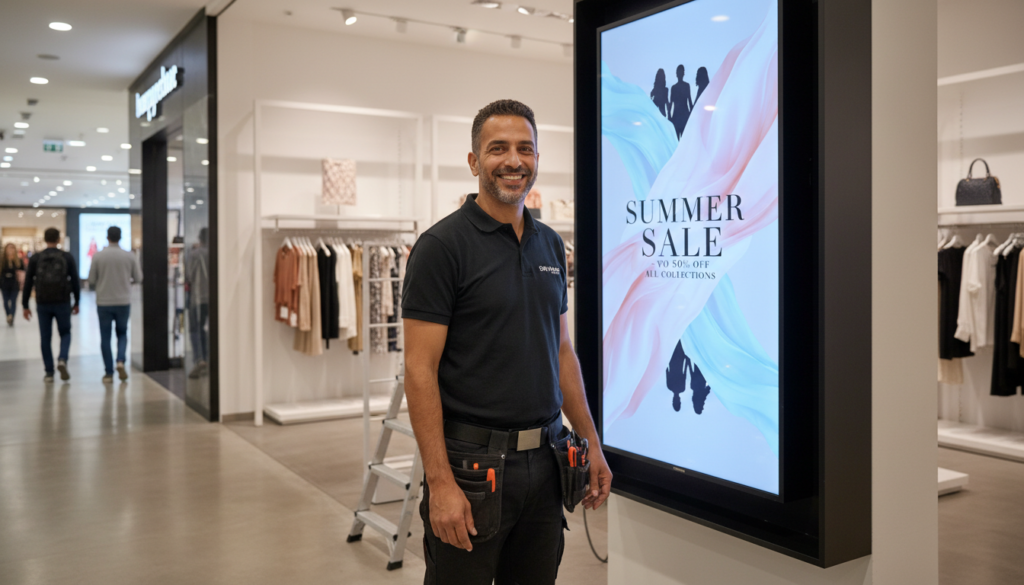
The worst mistake operators can make when deploying a digital signage network is trying to substitute commercial grade devices with cheaper consumer grade versions.
Commercial grade displays and media players come with a 3 year warranty and are hardened to withstand the rigours of a retail environment. They’re built to run 16 hours a day, every day. They’re built to operate in portrait mode. Domestic screens can’t offer that confidence.
The right CMS is crucial to success
Inserting USB drives into the back of screens is awkward and inefficient, even for a single site set-up. Across multiple stores it becomes difficult to track and almost impossible to verify compliance.
A good content management system (CMS) allows you to quickly and easily distribute promotional and brand content via a secure web-based portal as required.
A great CMS like Laqorr will also allow you to monitor the status and performance of your network so that you can quickly address any issues and ensure maximum uptime (device management).
Content is king
Whilst one of the appeals of digital signage is its ability to feature animation and full-motion video, like all good design it is best to keep it simple.
A crisp, high quality graphic of a delicious burger with steam wafting up from the bun will be far more enticing to consumers than a screen cluttered with multiple items and flashy animation.
It is also crucial to allowing adequate time between content rotations for the consumer to read and absorb the information being presented to them.
Stress-free installations (that look great) take careful planning
Just attaching a digital display to a wall doesn’t create the aesthetic that will keep customers coming back for more. Nor does it connect the display with your content management team.
It is important that installation of any display – from an LCD screen to a large format LCED – is discussed with the store design and fit-out teams as well as marketing, to ensure seamless visual integration of the digital with the physical.
Access to power and data and cable runs in the right locations are also potential banana-skins that can be avoided with the correct planning.
And finally, close cooperation with the IT department is required to ensure that connectivity is provided to the media player, and that the media player and communication protocols meet the IT security policies of your company.
Return on investment
Whilst every digital signage deployment is unique, industry research indicates that they can result in a sales uplift of as much as 5 percent. With the ability to schedule unique promotional content and adjust margins in real-time, digital signage allow operators to enjoy improved sales results that are simply not possible with traditional static menu boards or light boxes.
In addition there are also the indirect benefits of:
- customer engagement
- lowering perceived wait time
- an increase in customer satisfaction
- eliminating printing costs
- lowering labour costs

Finally, engage an expert partner
With so much to consider when making the switch to digital signage it is important to choose an integration partner that understands the needs of your business and can provide an affordable solution with best practices advice.
That’s where we come in. Let us help you develop a complete solution from concept through installation to ongoing management. It starts with your objective and ends with your satisfaction. It’s called digital signage that fits.